

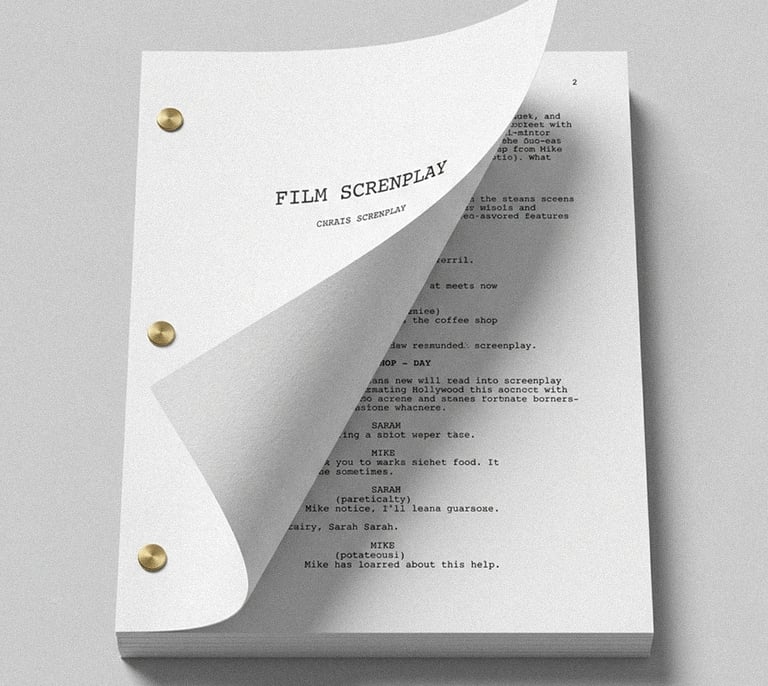
We live in a noisy world saturated with ephemeral "content" that's forgotten with the swipe of a finger. But we're not here to create content. We're here to make cinema.
We write because we believe in the power of an invisible structure. That same architecture that makes time bend in Christopher Nolan's hands, that transforms violence into absurd poetry with the Coen Brothers, or that makes the human condition painful, as in Iñárritu's films.
We know that inspiration is just the spark, but structure is the fire. As Robert McKee teaches, talent without craft is like fuel without an engine: it burns furiously, but it doesn't move.
Why did we found The Script Order?
Because writing is a solitary act of faith, but filmmaking is a collective miracle. We believe that great stories aren't born in a vacuum; they're forged in friction. They need a table. They need debate. They need critical eyes that love your story enough to tell you what isn't working.
We seek minds that understand that a well-developed character can change the world. That a line of dialogue spoken at the perfect moment can become timeless.
This table is for those who respect the craft.
We are looking for the next generation of storytellers with whom we will create fantastic worlds and unforgettable stories.
If your ambition is not just to finish a script, but to move an audience, then we speak the same language.
Welcome to the table.
Welcome to The Script Order.
Welcome to The Order
If you were contacted and made it this far, it's because we recognized your talent. You're about to enter a professional Writers' Room simulation. We'll challenge you to complete a 90-page First Draft. If you survive the test, you could win a permanent seat writing the next blockbusters with The Order.




Bootcamp for initiates
It is the high-performance induction and training process for future writers from The Script Order under a simulation of a professional Writers’ Room of 14 weeks where the Initiates must survive the Narrative Architecture of their own stories.
Phase 1: Blueprint
Weeks 1 - 5
Your story will be subjected to brutal narrative stress from day one. If your premise lacks commercial and structural traction, the showrunner will veto it and it will be rewritten from scratch. You won't write a single line of dialogue until your outline and your eight arcs are as solid as concrete. If your story can't withstand the scrutiny of your peers, it won't withstand the market.
Phase 2: Writing Rhythm
Weeks 6 - 10
Pure writing under pressure. You'll go from page zero to the midpoint (45 pages) and finally to a full 90 pages under the strict standards of The Order.
You'll learn to dissect your peers' work with the same rigor they'll use to attack yours. Mercy here is an operational flaw.
Phase 3: Packaging
Weeks 11 - 14
Your final draft will be evaluated by a panel of film industry professionals and veterans. We'll teach you how to package your work. Only the top 20% of this cohort will be considered for our investment portfolio. If your screenplay is flawless, The Order will turn it into an asset, and you'll receive a real percentage of any sales.
We separate Academic Vanity from Profitable Intellectual Property.
Why don't we look for students?


In academia, success is measured in years of study, approved theses, and degrees hanging on the wall. But in the film industry, that metric can be dangerous, especially if your narrative structure falters at a crucial moment in a scene—that can cost the production millions of dollars. At that level, nobody cares about your pedagogy; all that matters is whether your story holds the audience's attention.
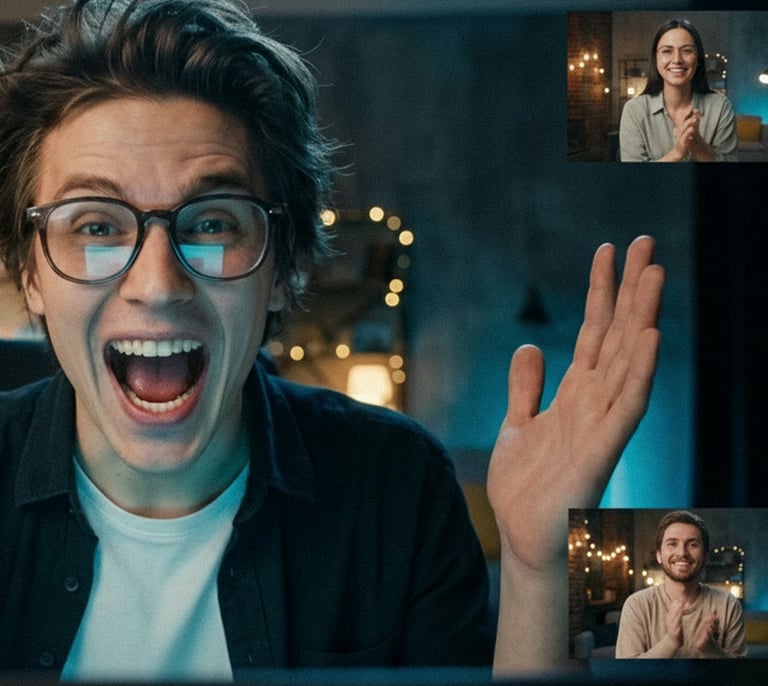

The Script Order's BootCamp for Iniciates is neither a pedagogical exercise nor a traditional diploma program. It's a high-pressure writing system designed for authors who have decided to leave the refuge of the classroom and embark on the path of The Order. Here, we don't evaluate using academic criteria; we evaluate based on the hierarchy and awareness of what is functional for the market.
Unlike an exact science, the art of filmmaking is a manifestation of emotions and visions that must be grounded in skill. Our mission is to avoid "art for art's sake" and create products that production platforms consider valuable assets.
Lessons from the Beta Tester's Table:
Our recent Beta Panel yielded a metric that's almost a mathematical formula for creative capital: 1 in 5 can finish the show. The biggest obstacle for the novice writer isn't a lack of talent, but rather an over-reliance on their own ideas and a rigidity in abandoning a plot or characters that aren't working.
We observed that authors often fall in love with ideas because they "sound good," but they resist the development process where the final result is usually radically different from what they imagined. However, the success at our table boiled down to a single act of courage: an Initiate who was able to discard 99% of their original idea to focus all their energy on transforming the remaining 1% into something universal, commercially viable, and powerful. Once it's understood that we write for the audience and not for our own reflection, structure ceases to be a prison and becomes the language that allows us to master suspense and emotion.
An Ecosystem of Real Achievements, Not Payments.
Our industry partners have praised this model, which fosters competitiveness and genuine growth. At The Script Order, access to superior collaboration benefits depends not on how much you can pay, but on your tangible achievements at the writing table. We seek authors with character, willing to engage, read twice as much, and rewrite three times as much. If you're introspective or shy, the program will force you to open up because here, the only winner is the story. This isn't a course to "learn" to write; it's a system for getting your work seen by the world.
The table management
We sat down with César De la Fuente, who will be leading this discussion. He is a filmmaker by profession with experience in artistic and film business strategy. He doesn't teach theory; he teaches how to transform a screenplay into an asset with real value.
He is currently developing three science fiction projects, the genre that demands the utmost rigor in world-building and narrative coherence. He applies that same level of precision to his methodology.
His approach forces a change in mindset: here, the screenplay ceases to be a personal expression and becomes intellectual property designed to compete in the industry.
Your background is an odd mix. You come from academia and business, yet you write about dystopian futures. Where does this obsession come from?
César: I grew up under the influence of titans. I deeply admire Lucas's myth-making, Spielberg's emotional mastery, Cameron's technical scale, and Tarantino's unique voice. They are essential references.
But I also carry in my DNA the example of Del Toro, Cuarón, and Iñárritu. I don't mention them just out of national pride, but because they redefined the game. They taught us that Mexican filmmakers don't have to ask permission to tell universal stories. I understood that technical excellence is the only passport that matters.
Even so, my personal obsession leaned toward science fiction because it's the genre that challenges you the most intellectually. I fell in love with works like Blade Runner, where flying cars aren't just decorations, but vehicles for a philosophical drama. In science fiction, you can't cheat. If the structure of your world doesn't hold up, the story collapses. That architectural challenge is what drives me.
You spoke to us about "discipline." Who taught you that rigor in such a creative environment?
César: I had the privilege of training under some of the industry's heavyweights. I learned directly from the old guard: one of my mentors, director Sergio Olhovich, brought with him the direct legacy of VGIK—the oldest film school in the world, founded by masters like Kuleshov and where figures like Tarkovsky studied. Through that rigor, you learn that filmmaking isn't about "gut feelings," it's a structure designed in the Eisensteinian style. That theoretical foundation was honed by the production drive of Jorge Santoyo and Patricia Coronado, and sharpened by the critical eye of Silvestre López Portillo and the passion of Eduardo Lizalde.
They taught me that filmmaking is a tough business. They taught me that inspiration is overrated and that the only things that matter are consistency and structure. That blend of classical theory and industrial pragmatism is the foundation of this project. We're not here to pat each other on the back; we're here to work with the same rigor they demanded of me.
You're currently developing three science fiction projects. If you're already active, why open a "Writers' Room" with strangers?
César: My current projects require "fresh eyes." I need the energy of people untainted by the vices of the industry. By opening this table, I'm not just teaching; I'm recruiting. I want to subject my own processes and those of the participants to a "Writers' Room" dynamic. Furthermore, I'm not alone in this. Behind "The Order" is a network of active colleagues—other writers and producers—who are also searching for that lost spark. I can't promise they'll be at every session, but I can tell you that this project stems from a collective concern among professionals seeking to revitalize storytelling.
What are you looking for in those who will sit at the table?
César: They need to understand that their script is the most important thing before they even touch a camera. I don't want someone who loves Blade Runner as much as I do, but they need to understand that to write it, you first have to understand the structure, the market, and the business.
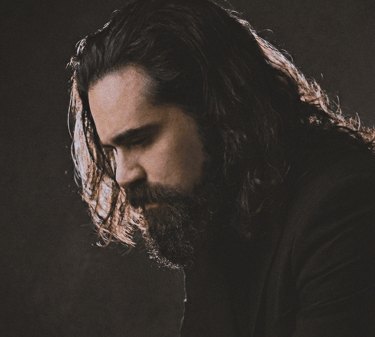


Only discipline will keep you at the table.
Terms of Rigor
Table rules
The Authority Veto: The Showrunner's word is final. If a plot or character isn't working, it's cut and abandoned immediately.
Active Camera Protocol: Camera off during live sessions is considered an absence. No avatars or shadowy viewers.
The 12-Hour Rule: Silence is an operational security breach. All requests for support or feedback on our closed channels must be answered and processed by the team within 12 hours.
Zero Positivity: Panel discussions are not therapy. Phrases like "I like" or "I feel that" are prohibited. All criticism must be a dissected, objective, and actionable analysis.
The Binary Regime (Three Strikes): Our monitoring system issues incident reports for delays, lack of transparency, or operational inertia. Three reports result in permanent dismissal.
Our model is not suitable for those who reject criticism or who have technical excuses. If you are accepted, you must follow these rules.


Skills you will develop
■ Professional Cinematographic Structure
■ Commercial Viability
■ Visual Storytelling
■ Creation of Three-Dimensional Characters
■ Design of Purposeful Antagonists
■ Resource Management
■ Writers' Room Dynamics
■ Intellectual Property Management
■ Craft and Discipline of Writing
■ High-Impact Pitching


Entry profile
The tools we use are the non-negotiable industry standard, and the profile we require is that of a disciplined narrative operator.


Profile of the Initiate:
Thick Skin and Zero Ego: Absolute tolerance for frustration. Your work will be attacked, criticized, and dissected in public. If you can't handle a character being cut, this won't go down well.
Acceptance of Hierarchy: You will work under a Team Leader and the Showrunner. We're here to contribute to the project; creative insubordination has no place.
Industry Vision: We're not looking for novelists trying to blindly adapt their 500-page book. We want agile minds who understand collaboration, structure, and are willing to share ideas with their colleagues to help save their story.
Professional Availability: The dates on the calendar are fixed. You must commit your schedule to the days and times stipulated for Sprints and live sessions.
Use of Technology:
Format Synchronization: Starting in Week 6, patience runs out. Either you write in professional software (Final Draft, Celtx, Fade In, StudioBinder), or it simply won't be read. Word is prohibited. Everything must be exported strictly to PDF.
Zero Data Loss: Setting up an automatic save system is mandatory. Losing a draft because "the computer shut down" is equivalent to automatic cancellation of the program.
Communications and Command Centers: Intensive use of Google Docs for the Architecture Phase and Google Chat (6 channels active 24/7) as your base of operations with your team.
Microphone and Camera: The quality of your pitch depends on your presence. A quiet environment, a stable connection, and your camera must be on in Google Meet. Visual anonymity is not allowed.



Kick-off
May 26th
Updated: May 20, 2026


The Script Order offers you the Writers' Room ecosystem and the pressure you need to go from being an aspiring screenwriter to a seasoned pro. If your script survives these 14 weeks, you'll leave with a 90-page screenplay and the opportunity to join The Order and collaborate on more projects.
Admission process:
Phase 1: Application. Complete the application questionnaire. We're looking for a profile, not a resume. Be honest.
Phase 2: Interview. If your profile matches the program, you'll receive a direct message to schedule a 5-minute session with the instructor.
Phase 3: If you're accepted, start preparing the story you'll develop.
Registration


5 Seats


On-line
0 places
3 per week
Tuesdays, Wednesdays, and Thursdays.
Time: 6:30 PM - 8:30 PM (GMT-6)
Ends: August 28, 2026
Pricing
Your access to The Script Order is a capital investment. The true value of this 14-week training is $1,681.33 USD, reflecting the operating costs of an executive consulting firm that aims to transform your vision into an intellectual property asset. However, we are seeking partners.
Executive Investment
■ Focus: Independence and Ownership
■ Investment: $1,681.33 USD (One-time payment)
■ Intellectual Property: The writer retains full ownership of their work. The Script Order acts as a consultant and has the right of first refusal.
■ Profile: Writers seeking to accelerate their project with high-level mentorship while maintaining complete control of their assets.
■ Guarantee: Immediate access after the interview and payment confirmation.


"We invest in you because we believe in the potential of your work for the international market. But our generosity is legally protected: the grant is a results-based contract. At The Order, talent that doesn't translate into finished pages is a creative waste that we cannot fund."
Performance (Scholarship)
■ Focus: Recruitment and Partnership.
■ Investment: $0 USD (Subject to a compliance agreement).
■ Intellectual Property: Transfer of copyright to The Order for packaging, sale, and professional distribution.
■ Profile: High-potential writers seeking to join The Order as contributors, undertaking a results-based commitment.
■ Guarantee: Subject to the signing of a legal contract where non-compliance or desertion triggers the collection of the total value of the program.


Frequently Asked Questions
How can I access the calendar and detailed schedule of sessions and deliverables?
"For security and confidentiality reasons related to our methodology, the exact schedule of sessions, writing sprints, and individual reviews is only available to writers who have passed the interview and formalized their enrollment. Once enrolled, you will be able to download the official program."
I have a full-time job, will I have time to write?
"The program requires a minimum of 3 to 5 hours of Deep Work per week. Being on social media while the page is open doesn't count. If you focus and follow our structure, you'll finish the script. If you get distracted, you'll need 10 hours. Professional filmmaking doesn't accept lack of time as an excuse for not submitting a draft."
Do they provide any certificate or diploma with academic validity?
"We are not an academy, nor do we aspire to be, so we don't hand out diplomas to hang on the wall. In this industry, the only document that opens doors is a finished screenplay registered in your name. Your true graduation is leaving with a 90-page intellectual property asset ready to be registered with the INDAUTOR (National Institute of Copyright) and protected. You gain intellectual property, not academic credit."
What are the live session times? I have a full-time job.
"Unlike older programs, Sprint and live session times are pre-set by calendar and are fixed. While we look for times outside of office hours (evenings or weekends), it's your responsibility to adjust your life to the Table, not the other way around."
Do I need to have previous experience or have studied film?
"You don't need a degree, but we demand narrative maturity and zero ego. This program is for creatives (novelists, advertisers, journalists) who have latent talent but lack screenwriting skills. We give you the format, the tools, and the pressure; you provide the discipline."
What happens if I get writer's block and can't write for a week?
"Creative block doesn't exist in our program; there's only a lack of structure. That's what the pressure from the Board is for. If you get stuck, you have 24/7 support through our internal channels to get help from your colleagues and the Showrunner. We intervene immediately and motivate you to move forward. We don't tolerate blank weeks."
Stop dreaming your movie. Write it.
Do you have any further questions? Write to us:
Subscribe to our newsletter
info@thescriptorder.com
© 2026. All rights reserved.

Terms and conditions
Privacy Policy
Frequently Asked Questions